Web Application Development in Prague

Some problems don't fit on a website. They need actual software: a portal, a dashboard, a booking system, an internal tool for a company whose process has outgrown spreadsheets and email. We design and build web applications for that job, so one fast, reliable system stands where the chaos used to be, and your team is glad to use it.

From€1,650per project

  • < 1 sload time on our live sites
  • 2-6 wksfrom the first call to launch
  • 40/30/30paid in three stages, 40% at the start
  • 30 daysof free fixes after launch

You get a tool that does exactly what your company does by hand today: bookings, orders, approvals, stock, a client portal, the numbers on one screen. We shape the screens around your process, so they match the way people already work.

Software like this takes work off people, and information stops getting lost between emails and spreadsheets.

Software like this takes work off people, and information stops getting lost between emails and spreadsheets.

We start with a small working piece: first one part of the process that you run in live operation, then the next.

We start with a small working piece: first one part of the process that you run in live operation, then the next.

That is how we find out whether we're solving the real problem before the whole budget is spent.

That is how we find out whether we're solving the real problem before the whole budget is spent.

You receive code, data and documentation as we go. Before the quote we walk your process step by step: the price hinges on the exceptions living in it, and the screen count barely moves it.

You receive code, data and documentation as we go. Before the quote we walk your process step by step: the price hinges on the exceptions living in it, and the screen count barely moves it.

Every service in this category, explained

  • Web Applications

    Browser apps from the first version to live operation.

    In short Full applications that run in the browser, from a first working version to production. We keep the scope honest, ship in milestones you can actually use, and choose technology that will still make sense to maintain in two years.

    How we workWe break the scope into milestones. Each one ends with something you can actually try, and you sign off on it before we move to the next. The foundation, login, roles, data handling, comes first, because everything else depends on it. A staging environment runs from day one, so your feedback comes straight from using the real app.

    What you getAn application that runs in the browser, with login, roles and permissions, data handling, export and change history built in. You also get a test environment, the source code in your own repository, and documentation that lets any developer pick it up without us.

    What's included

    • MVP to launch in usable milestones
    • Tech built to last
    • Code that's fully yours
    • Login, roles and permissions come standard
    • Change history and an audit log

    SaaS Platforms

    A product with subscriptions, plans and separated customer data.

    In short A product business needs tenant separation, subscriptions, team roles and usage limits built in from day one. We've built SaaS platforms from scratch, so we know which corners are safe to cut for an MVP and which ones come back to bite you later.

    How we workFirst we lock down what's expensive to change later: data separation between customers, the subscription model, roles inside a customer's team, plan limits. Then we build the first version, noting along the way which parts will need rewriting at the next stage of growth. Onboarding and billing get tested on trial accounts before any paying customer shows up.

    What you getA platform with customer data kept separate, subscriptions, renewals and upgrades, a trial period, billing, and roles inside a customer's team. It comes with an admin panel where you can help a customer without touching the database, usage metering against plan limits, and a written list of what to rebuild later.

    What's included

    • Tenant separation, subscriptions, roles
    • Usage limits from day one
    • Built by a SaaS website design agency
    • Data separated per customer
    • Trial period, smooth onboarding

    Dashboards

    One screen that shows how you are doing.

    In short One screen that answers “how are we doing?” We turn live data from your store, ad accounts, CRM or sensors into one glanceable view. Fast even with millions of rows.

    How we workWe start with the questions the screen should answer, and only then figure out which systems the data can come from. We connect the sources and set the refresh rate, what happens during an outage, and who's allowed to see what. You run the finished dashboard for a week, and we cut whatever turned out to be noise.

    What you getA live view of your data, readable on an office screen or a phone. You get a note on where every number comes from and how often it refreshes, permissions already set up, and an alert if a source stops sending data.

    What's included

    • Live data from every source
    • Fast even on millions of rows
    • A decision at a glance, no export
    • Refresh rate set together
    • Permissions on who sees what

    Client Portals

    A client login instead of endless email threads.

    In short Give customers their own login so they stop hunting through an email thread: orders, documents, invoices, tickets, project status, all in one place. It cuts your support load and looks a lot more professional than attachments flying around.

    How we workWe go through what currently arrives by email and decide what belongs in the portal and what doesn't. We build the login, permissions and notifications, import your existing documents and history, and open it to a handful of clients first. Their first questions shape how things get named and ordered, because that's what decides whether a portal actually gets used.

    What you getA portal with a client login, an overview of orders and their status, documents and invoices to download, requests along with how they were resolved, and a searchable history. It includes access for several colleagues from the same company, role-based permissions, and notifications when something changes.

    What's included

    • Orders, documents, invoices, tickets
    • Cuts your support load
    • A login of their own
    • Invite several people from one company
    • Alerts when things change

    Booking Systems

    Bookings with calendars, capacity and holidays.

    In short A booking system for services, appointments, rooms, courts or equipment: calendar, capacity, opening hours, exceptions and holidays. Deposits and reminders cut the number of people who never show up. Booking systems ship connected to your team's Google Calendar.

    How we workFirst we write down the operating rules: capacity, opening hours, exceptions, holidays, cancellations and rescheduling, exactly as your terms describe them. Then we build them in, connect payments and deposits, and sync the calendar both ways. Before launch we walk through the collision cases: two bookings on the same slot, a last-minute cancellation, a holiday in the middle of the week.

    What you getA booking system with a calendar, capacity and cancellation rules, payments and deposits, and reminders by email or SMS, all synced both ways with your team's calendar. It includes an admin panel for slots and exceptions, plus a bookings overview you can export.

    What's included

    • Calendars, capacity limits, deposits
    • Reminders and payments wired in
    • Two bookings can never collide
    • Two-way calendar syncing
    • Cancellations handled on your terms

    Internal Systems

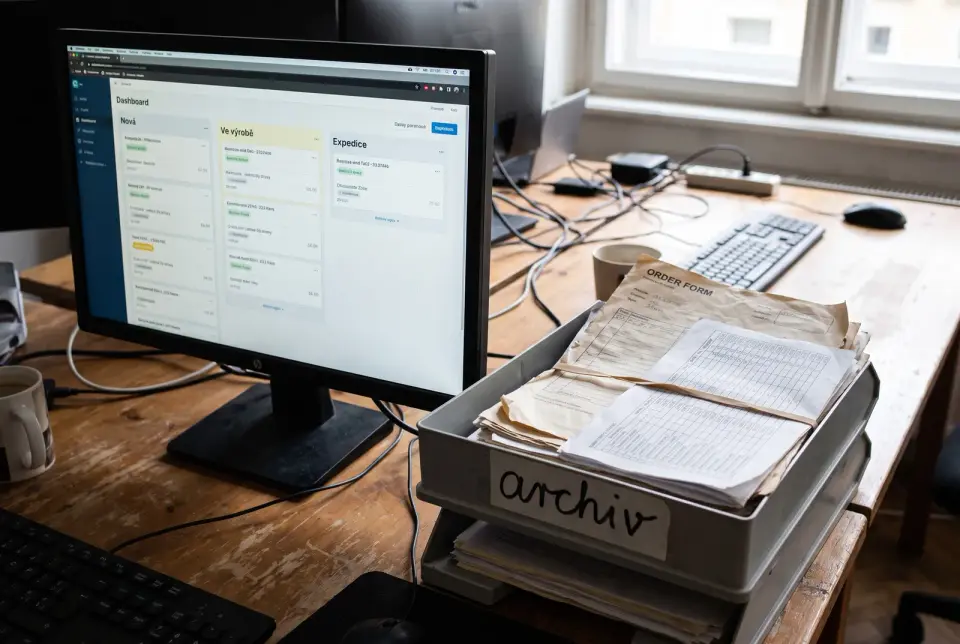
    Stock, orders and approvals instead of a shared spreadsheet.

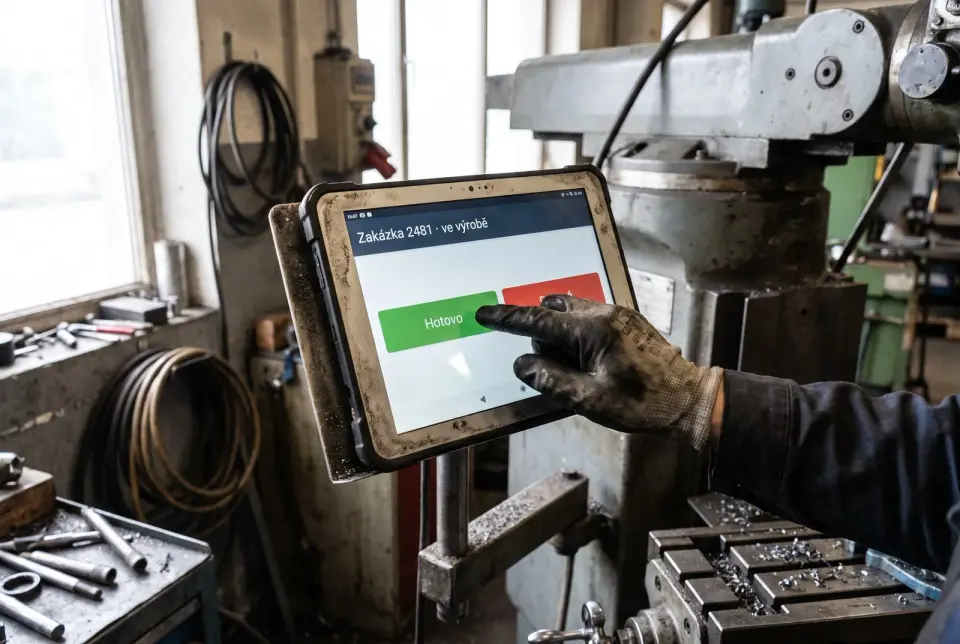
    In short Proper tools for your team, built to replace the shared spreadsheet nobody dares touch: inventory, production planning, HR flows, approvals. We watch how the work actually happens first, then build around that.

    How we workWe start by mapping how work actually runs today: who enters what, where it gets retyped, where people end up waiting. That gives us a short list of steps the system should take over, and only then do we start building. We migrate the data from the old spreadsheets and train each person on their own part of it.

    What you getA tool built around your process, with data migrated from the old spreadsheets and role-based permissions. It comes with a map of how the process really runs and hands-on training for your team, so the system is in daily use from week one.

    What's included

    • Built around how you actually work
    • Replaces shared-spreadsheet chaos
    • Inventory, planning, approvals
    • A look at how work runs today
    • Data migrated from old spreadsheets

    Custom web solutions

    Calculators, system links and migrations built to fit.

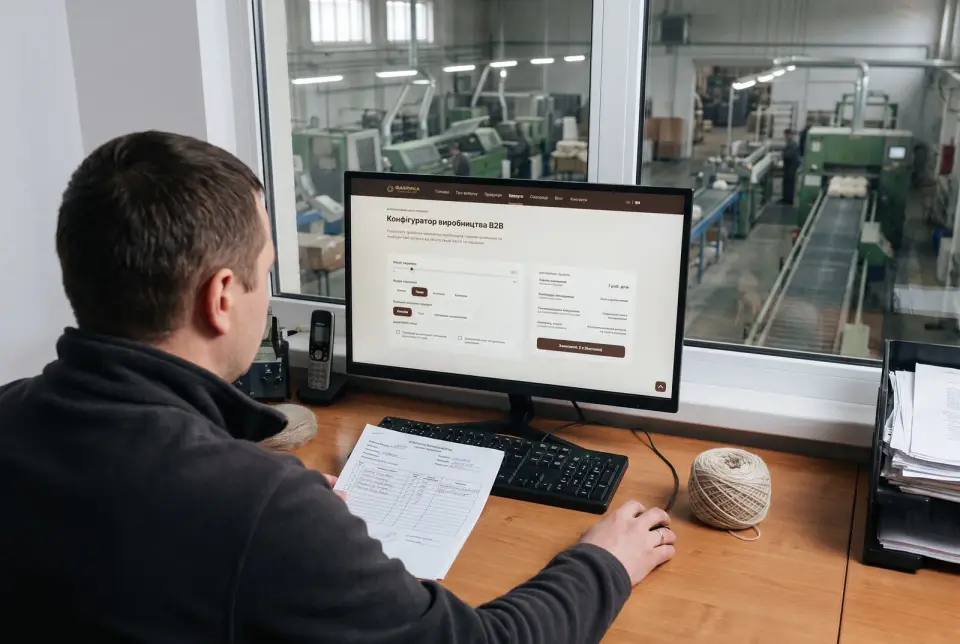
    In short The catch-all for everything nonstandard: calculators, configurators, API mash-ups, migrations, odd integrations. If it needs to run on the web and doesn't exist yet, this is where we build it.

    How we workFirst we check whether your system has an API and what we can pull from it. Then we cut the work into small pieces, so you can start with one thing, measure whether it paid off, and only continue if it did. Every piece we hand over is deployed and running from day one.

    What you getOne concrete, finished thing: a calculator, a configurator, a link between two systems, a migration, or an automated step that used to be manual. Each one comes with source code, a description of what data goes where, and a scope estimate for the next step, so you can decide whether it's worth taking.

    What's included

    • Calculators, configurators, integrations
    • Migrations and API mash-ups
    • If it runs on the web, we'll build it
    • We flag a missing API early
    • Start small, measure, then continue

    Sound familiar?

    John Doefirst call
    1. Everything lives in spreadsheets and nobody knows which version is current 😕

    2. A spreadsheet is a great start and a miserable operation: two people overwrite it at once, a third makes a copy, and from that moment there are two truths. Our first step is usually small: move one process into a tool with a single version, where you can see who changed what.

    3. We bought an off-the-shelf system and use a tenth of it…

    4. The usual ending: you pay for eighty features because of three, and the company bends to the software. Before we build anything, we check whether finishing or connecting the existing system would do, because a rebuild over three features often fails to pay off.

    5. We retype data by hand between programs that know nothing about each other 😔

    6. The most expensive work in a company, because you pay for it every day and it breeds mistakes. Almost always the systems can be connected through an API they already have; nobody just mentioned it. This is the most common place where an investment in your own tool comes back fastest.

    7. The programmer left and nobody understands his system…

    8. That is why we hand over the repository, documentation and access as we go, and build on mainstream technologies over whatever happens to interest us this month. The control question to ask about every offer, ours included: can anyone else take this over after you, or only you?

    Which one sounds like you?

    Pick your case and enter your own numbers. The screen works out what you're losing or gaining.

    We track everything in spreadsheets

    How many people work in the spreadsheets3
    Hours a week each spends4 h
    How much your hour is worth€30

    Manual spreadsheet work costs

    €1,600 a month

    3 people at 4 h a week each, that's 52 h a month at €30 an hour. An internal system with us starts at €3,650 and pays for itself in 2.3 months.

    We count a month as 4.33 weeks. Upper estimate: we assume the system takes over the spreadsheet work entirely. The “from” price is from the studio price list.

    Clients keep asking about progress

    How many status enquiries a week31
    Minutes per reply5 min
    How much your hour is worth€30

    Replying costs you

    €340 a month

    31 enquiries a week at 5 min each, that's 11.2 h a month at €30 an hour. A client portal where they check status themselves starts at €2,850 and pays for itself in 8.5 months.

    We count a month as 4.33 weeks. Upper estimate: we assume no one asks about status anymore. The “from” price is from the studio price list.

    I need a working tool

    Enquiries a week by phone and email31
    Minutes per enquiry8 min
    How many come in evenings and weekends30%

    Handling enquiries by hand takes

    18 hours a month

    That's 2.2 working days. Another 40 enquiries a month wait until morning for a reply. A booking system with us typically costs €3,900.

    We count a month as 4.33 weeks. All the numbers are yours, the screen just multiplies them.

    Spreadsheets and no-code, or a system of your own?

    Before it comes to development, most companies already handle the process somehow: with Excel, Airtable, Notion, a combination of three tools and one brave person. Often that is perfectly fine, and a custom system would be an expensive answer to a cheap problem. The difference lies in when running that construction starts costing more than software would.

    When spreadsheets and no-code are enough

    • The process still changes every month and nobody knows what it will look like in a year
    • A handful of people work in it, sit next to each other and can talk it through
    • The volume is such that manual retyping takes a few minutes a day
    • The data is nothing sensitive, and living in a service you don't control is fine

    When it starts getting expensive

    • Errors from manual retyping cost more than the time it saves
    • Customers or suppliers enter the process and need their own login, and a shared link stops being enough
    • Per-user fees and record limits grow faster than the company
    • You need rules that no-code can't enforce: roles, approvals, change history, audit

    Free

    Not sure what's wrong with your site?

    Run a free SEO check and see speed, mistakes and technical gaps in seconds. No sign-up needed.

    From the first call to the first usable version

    1. A process hurts

      Process review comes first

      We go through how the work runs today: who enters what, where a spreadsheet appears, where things get retyped and where time gets lost. The feature list comes out of that: an app built from a wish list can do everything and helps with nothing.

    2. You know what v1 holds

      Scope, price and the edges of version one

      We agree what is in the first version and what is deliberately left out. You get a price and a deadline for this version alone, because a budget for "the whole system", something still being defined, is a guess dressed up as a promise.

    3. You click through the tool

      A prototype you can click through

      Before programming starts, you see a clickable version of the main screens with your data. Here changes are free, and here it comes out that the same word meant two different things to each of us.

    4. You use the first parts

      Development in usable milestones

      We build in steps, and each step ends with something you can try; six weeks of silence followed by a big reveal is how projects go wrong. The staging version runs the whole time and your people can go in and use it.

    5. Your team works in it

      Live operation and training

      Deployment, data migration from the current setup, training and documentation for the people who come after them. For the first 30 days we fix bugs free of charge.

    6. It grows with you

      Growth driven by reality

      An app people actually use asks for its next features by itself, and the list will differ from the original one. We continue on agreed capacity, or you take development in-house: you've had the code, repository and documentation from the start.

    How much a custom system costs

    From €4,100 and from eight weeks. The price is set by the number of exceptions in your process. That means how many roles there are, what needs approval, how many systems it connects to, and what should happen when someone takes a step out of order. The number of screens matters far less. That's why we walk through the process step by step before the quote, and why systems don't come with a package price list. The budget can be split into stages: a first working part goes live, then you decide whether to continue. That's the normal way to go. Nothing is added on top, the price is final.

    Check pricing

    Apps that run in the browser

    • 3Dscene in the browser, no plugin
    • 0,10 sserver response, measured 8/2026

    An investing course platform that hands over compound interest as a tool you can pull on, instead of explaining it in a paragraph.

    Open the case study
    Spectrum Interactive
    Financial education · 2026

    Spectrum Interactive

    • 78 kBwhole app, compressed
    • 0,09 sserver response, measured 8/2026

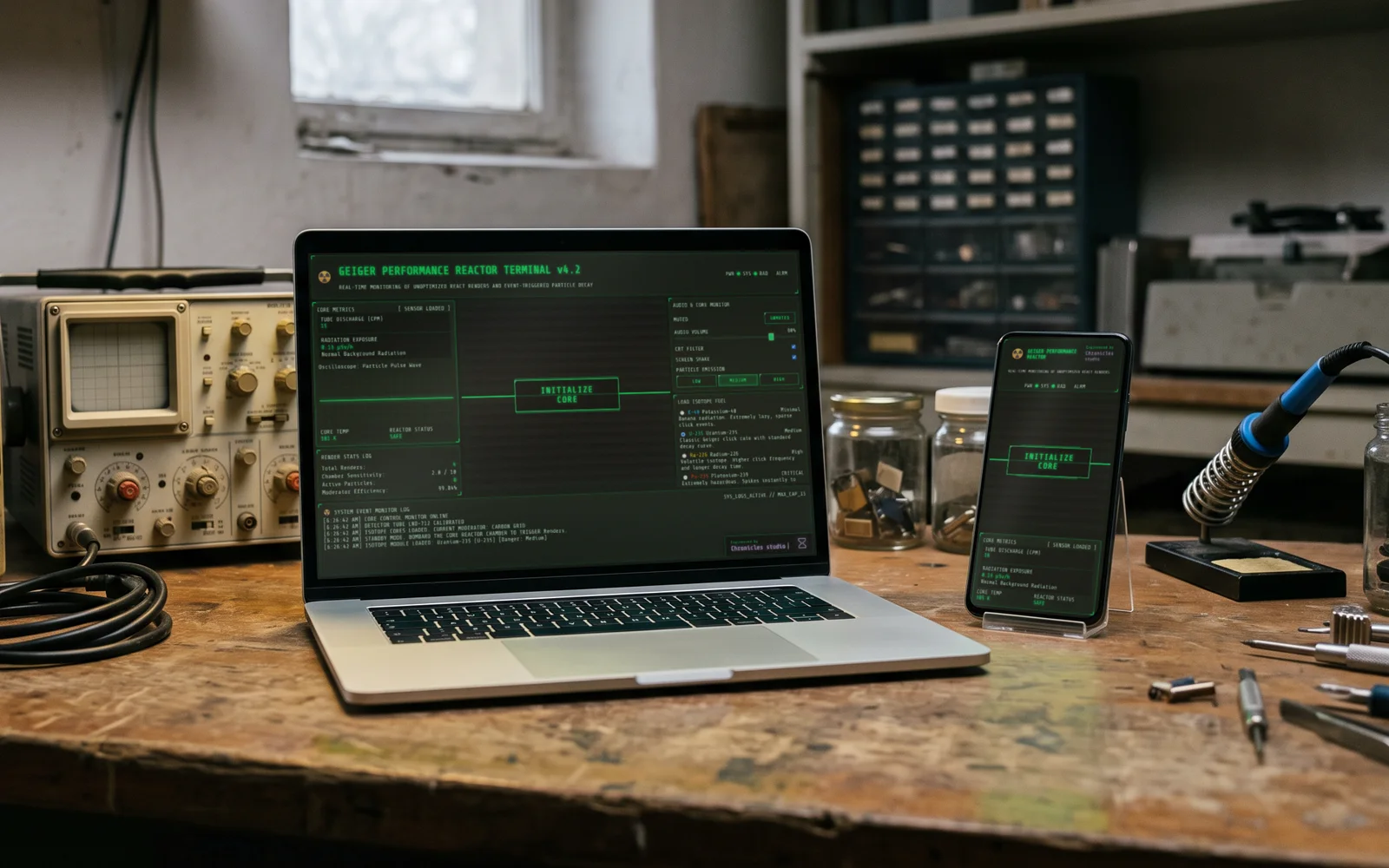
    An experiment built around one question: what would badly written code sound like if you could hear it? The answer is a Geiger counter.

    Open the case study
    Geiger Performance Lab
    Own experiment · 2026

    Geiger Performance Lab

    01 / 02

    Static-first, sub-second, yours to keep

    We build static-first and match the stack to what the project actually needs. Pages ship as plain HTML, and JavaScript loads only where it earns its place. That's why our sites hit sub-second loads without any caching tricks. Dynamic features like search, accounts and checkout run on modern serverless infrastructure that scales without a sysadmin. You get the repository, the docs and the deploy pipeline. There's no lock-in: any developer can pick it up after us.

    What people ask most

    How much does web application development cost?

    From €4,100. You get a fixed price in writing after we walk through the process together, usually within three working days. When the scope is unclear, we start with a paid analysis at a fraction of the build price; its output is a specification and a price you can take elsewhere too. Nothing is added on top, the price is final.

    How long does development take?

    From eight weeks to a first version you can use in live operation. The aim is for the first part to save work as early as possible, because only then does it show whether the specification was right. A year of building followed by one big handover is what we avoid.

    Will you connect it to the systems we already use?

    Yes, and that tends to be half the value of the whole project: accounting, warehouse, CRM, e-shop, attendance, payment gateways. If the system has an API, we hook it up. If it has none, we tell you upfront what the options are and what each route involves.

    Who owns the code and the data?

    You do, and you receive them as we go. Repository, documentation, server access and data export. We build on mainstream technologies precisely so that anyone else can take the project over, with no dependence on us.

    What if halfway through we find it should work differently?

    That happens routinely with systems, and it is closer to good news than to a problem, because it usually comes from real operation. That is why we work in stages: a change of scope gets priced first, and you decide whether to go into it or push it to the next stage.

    Who runs and fixes it after launch?

    For the first 30 days after launch we fix bugs free of charge. After that you can keep maintenance and development with us, take it over yourself, or hand it to your own developer, to whom we pass the project in person. Nobody pushes you into a monthly fee. With a system in live use, though, we recommend agreeing who reacts when something happens.

    Can it handle sensitive data and GDPR?

    Yes, and it is part of the design from the start: roles and permissions, change history, backups, data stored in the EU. For systems that hold personal data we also write down who has access to what, because that document is the one most often missing during an audit.

    Do you build mobile apps too?

    We build web applications that behave like apps on a phone, including installing to the home screen and working offline where that makes sense. If your case genuinely needs a native app in the stores, we say so and won't pass a web app off as the same thing.

    Are you a SaaS website design agency?

    We're a web application development company, and SaaS platforms are one of the things we build: the product itself, the admin panel, and the public website around it. SaaS starts at €4,900, simpler systems on this page from €1,650. SaaS video production for the launch is in-house as well, so the product and the film come from one crew.

    Ready to build something solid?

    Drop us a message. We reply within a few hours to set up a quick chat.

    1. 1Within hours: a human reply: first thoughts, maybe a question or two.
    2. 2Within days: a 30-minute call. You talk, we listen. Free, no obligations.
    3. 3After the call: a written fixed quote, or an honest answer that we're not the right fit, with a tip on who to ask instead.

    No sales scripts. You'll be talking to the people who'll actually build it.

    Allergic to forms? Fair.info@chronicles.cz+420 773 230 278

    By submitting this form, you're agreeing that we can use the details above to answer your enquiry. How we handle your data. We use it only to reply. We never sell it or add you to a mailing list.