Usability Testing and Design Handoff in Prague

A design is done when it ships intact and measurably works. We test it with real people who see your product for the first time and write down where they hesitated. Then the files go to the developers with the behaviour described, so nothing gets lost on the way into code. After launch we watch the numbers and keep adjusting.

From€600per project

  • 5users surface about 80% of problems
  • 1-2 wksto a clickable prototype
  • 2 roundsof feedback included in the design
  • €0for a change while it is still a design

Usability testing shows whether people can do the essentials: find a service, send an enquiry, pay. User testing costs from €600, a design handoff to developers from €250. After launch we track heatmaps and conversions and improve the site month by month.

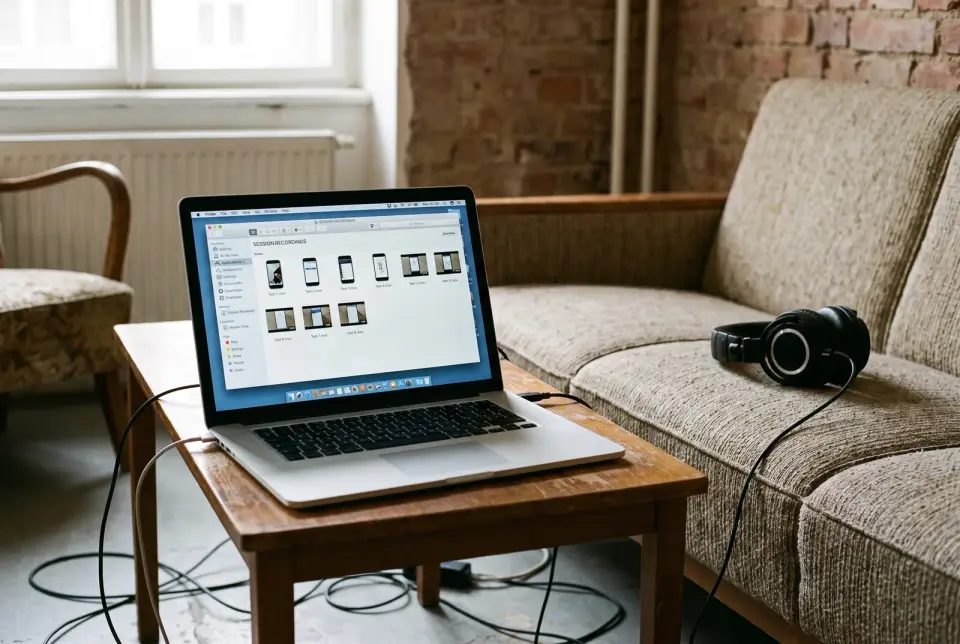
Tests run with five to eight people from your audience and you get the full recordings.

Tests run with five to eight people from your audience and you get the full recordings.

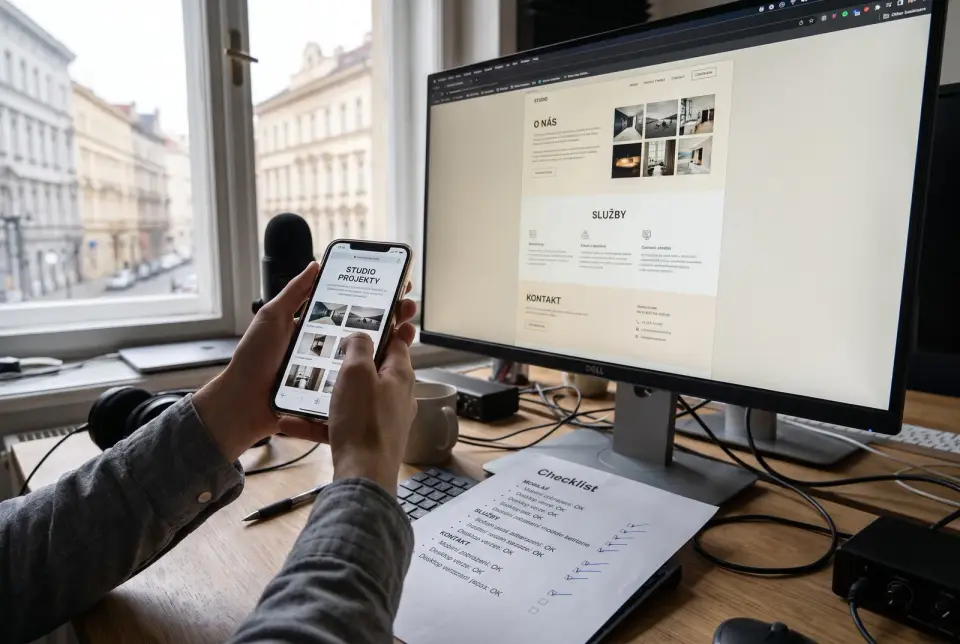
Before release we check the finished site against the design screen by screen, on mobile and desktop.

Before release we check the finished site against the design screen by screen, on mobile and desktop.

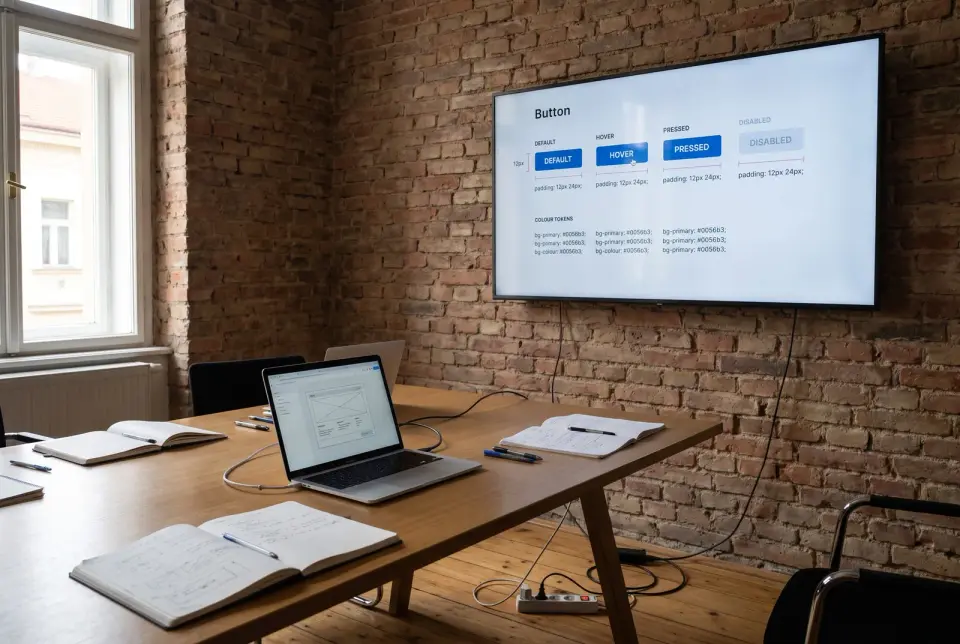
Developers get components with states, sizes and tokens, so nothing has to be guessed.

Developers get components with states, sizes and tokens, so nothing has to be guessed.

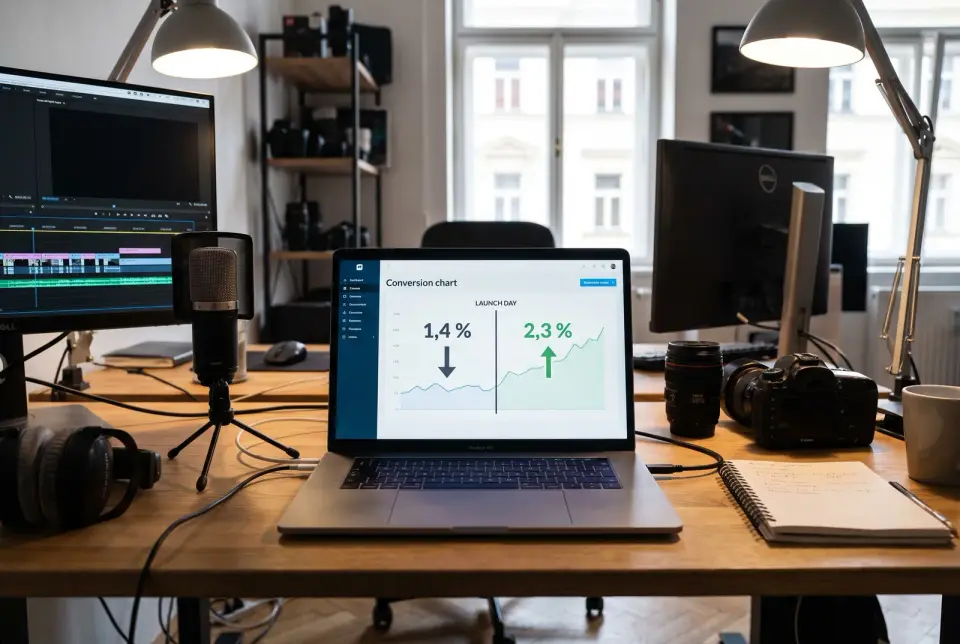
After launch we compare conversions with the baseline, so you can see what the changes brought.

After launch we compare conversions with the baseline, so you can see what the changes brought.

Every service in this category, explained

  • User testing

    Real people do real tasks and you see where they stop.

    In short We watch real people attempt real tasks in your product, in person or remote. Five users typically expose 80% of the problems, and nothing ends a design debate faster than a video of someone stuck.

    How we workWe prepare tasks that answer a specific question, recruit participants who match your customers and run the tests in person or remotely with screen recording. During the session we stay out of it and let people get as far as they get on their own. Findings are then counted by how many people got stuck on each problem.

    What you getEdited clips of the specific sticking points, plus a list of findings with a proposed fix for each one. You also get the test script and the full session recordings, so you can revisit any detail later.

    What's included

    • Real tasks, watched as they happen
    • Short clips of the problems
    • Findings ranked by frequency
    • In person or online

    Conversion rate

    More of the visitors you already have do what they came for.

    In short We A/B test copy, layout and flow against one metric: how many visitors do the thing you want. The gains compound, a few percent per test, and cost nothing extra since they run on the traffic you already have.

    How we workWe start by measuring and pulling findings from the data, then change copy, layout and process steps one at a time. A test keeps running until the numbers actually mean something, no matter how good they look early on. Every result gets compared against the original version.

    What you getChanges that held up in testing, deployed live, plus a record of every test: what changed, how long it ran, how many people went through and what the difference was. Plus a list of hypotheses still waiting their turn, ranked by expected impact.

    What's included

    • Measurement, then changes
    • One variable per test
    • Gains with no extra ad spend
    • Measured against the original version

    Heatmaps

    Tracking that shows where people hesitate and leave.

    In short Measurement set up so you can see where people hesitate, where they click in vain and where they leave. Next to the visit count you also see how far someone gets and which step loses them. Without this layer every further change is guesswork.

    How we workWe set up measurement properly: goals and events that match your business, with GDPR consent built in from the start. We switch on heatmaps, session recordings and funnels, then verify the events are actually being collected. Every month, we read the data and turn it into a fix list.

    What you getMeasurement set up with named goals and events, heatmaps, session recordings and funnels for the key journeys, plus a document explaining what's measured and how it's calculated. Every month, a short fix list ranked by impact.

    What's included

    • Heatmaps, session recordings, funnels
    • Goals tied to real business results
    • Set up with GDPR in mind
    • A fix list, ranked monthly by impact

    What's in the box

    You do not order these separately: they are in every job, and they are ours to do.

    Design Validation

    We check the built product against the design before release: spacing, states, flows, accessibility. It catches the small deviations that add up and make a shipped product feel slightly off.

    We go through the finished product screen by screen against the design: spacing, states, copy, edge cases. We also test what a design can't show on its own: keyboard control, a screen reader, a slow connection and unusually long text. Every deviation gets logged with a screenshot and a link to the exact spot.

    OutputA checklist of deviations, each with a screenshot, a link to the spot in the product and a note on how it differs from the design. It drops straight into your developer's task list, ready to work through.

    • Deviations logged with screenshots
    • Keyboard and screen reader checked
    • Catches the details that add up
    • A checklist to clear before release

    Design handoff

    Specs, tokens, assets and annotated flows, prepared so developers build it right the first time. Fewer clarification calls, fewer surprises about what the design actually meant.

    We prepare size and color specs, tokens and assets in the right formats, including high-resolution and dark-mode variants. Flows are annotated so it's clear, for every screen, what happens after a click and what the user sees on error. The handover itself happens on a call, walking through the material together.

    OutputA handover package: screens with specs, tokens, exported assets and annotated flows, plus notes from the handover call and the questions that came up on it. After that, we stay available for the questions that will show up anyway.

    • Specs, tokens and finished assets
    • Behavior spelled out per screen
    • Dark mode and high-res variants
    • Handed over on a call

    Developer support

    A designer stays on call during implementation: answering questions, reviewing builds, making the pragmatic call when reality bites. It's the cheapest insurance against a design dying somewhere in development.

    The designer is part of the team for the whole implementation: answering questions, reviewing builds and making calls on situations a design couldn't foresee. We catch deviations one at a time, right away. For each, we say whether it's a detail that can wait or something that would spoil the product.

    OutputA designer available for the agreed period, ongoing notes from every build review and a record of decisions on the disputed points. The result is a shipped product that actually matches the design.

    • A designer on call throughout
    • Regular review of built versions
    • Decisions weighed against the budget
    • Deviations caught as they happen

    Technologies

    Sound familiar?

    John Doefirst call
    1. The finished site looks different from the design

    2. When developers get only pictures, they improvise spacing, states and the mobile version. We hand over specs that leave nothing to chance and check the result against the design.

    3. After launch we don't know whether the redesign helped

    4. Without a baseline, success can't be measured. We record conversions before launch and compare them after, so you know whether the change paid off.

    5. Visitors get stuck and we don't know where

    6. Heatmaps and session recordings show where people click, how far they scroll and where they leave. That becomes a list of changes we test one at a time.

    7. Developers ask about every detail and the project stalls

    8. Questions during development cost weeks. The designer is available for the whole build and answers the same day, so the team never has to wait.

    Which one sounds like you?

    Pick your case and enter your own numbers. The screen works out what you're losing or gaining.

    People leave and I can't tell why

    Visitors a month2,000
    How many visitors buy1.5%
    Average order€120

    For a UI/UX audit to pay for itself in 3 months, you just need

    +8.3% on conversion

    Right now the site brings in about €3,600 a month: 2,000 visitors, of which 1.5% buy at €120. A UI/UX audit typically costs €900.

    Typical price from the studio price list. Revenue here ignores margin. This is the breakeven point, no one can guarantee a conversion increase in advance.

    I'm starting something new

    Development budget€20,000
    How many screens you think will need reworking25%

    At risk of rework after launch

    €5,000 of the budget

    Reworking 25% of the screens after launch means paying another €5,000 out of €20,000. A clickable prototype typically costs €1,200, and these changes happen there before any code is written.

    You set the share that needs reworking. The prototype's typical price comes from the studio price list.

    Customers are the ones reporting bugs

    How many bugs a month after release8
    Hours to fix one3 h
    How much a developer's hour costs€30

    Post-release fixes cost

    €720 a month

    8 bugs a month at 3 h each, that's 24 h of work at €30 an hour. Testing with real users before release typically costs €1,150 and pays for itself in 1.6 months.

    Upper estimate: we assume testing catches every one of these bugs before release. We don't count customers a bug puts off. Typical price from the studio price list.

    Test it within the team?

    Clicking through the site in the office before launch is sensible and catches broken links and typos. What such a test misses is people who see the product for the first time with nobody telling them where to click.

    When your own check is enough

    • You're hunting technical bugs: dead links, typos, broken forms
    • You're changing a small detail on a site that otherwise works
    • The site is small and every path can be walked in an hour
    • You have the time and tools for heatmaps and know how to read them

    When it isn't enough

    • The team knows where everything is and can't see a newcomer's confusion
    • Nobody recorded a baseline, so the effect of changes can't be measured
    • The check against the design happens only on desktop and mobile is left out
    • Heatmaps get read as impressions and changes aren't tested one at a time

    From design to a site that held up with real people

    1. You know what we test

      Call and goals

      We agree what the test should find out and which numbers decisions will rest on. You get a fixed price and a date.

    2. You hear real users

      Test with people

      Five to eight people from your audience get tasks on the prototype or the live site. You get the recordings and a summary.

    3. The team knows what to build

      Developer handoff

      Components with states, sizes and colour and type tokens, behaviour notes and mobile versions. A spec you can build from without questions.

    4. Nothing waits for an answer

      Support during the build

      The designer answers developers throughout the build, usually the same day, and draws the states that only show up in code.

    5. The site matches the design

      Check against the design

      We go through the finished site screen by screen on mobile and desktop and log differences with screenshots. They get fixed before launch.

    6. You know what the change brought

      Measurement after launch

      We compare heatmaps and conversions with the baseline. With monthly optimisation we then test changes one at a time.

    What testing and handoff cost

    User testing from €600, design handoff from €250, developer support from €350 a month, conversion optimisation from €300 a month. Nothing is added on top, the price is final.

    Check pricing

    Evidence first, taste second

    Evidence drives our design decisions: research tells us what to fix, prototypes prove it works on real people, and analytics confirm whether it worked after launch. Everything sits on one design system, a single source of truth for color, type, spacing and components. A screen that used to take days now takes hours, and the product stays consistent as it grows. We don't vanish at handoff either: a designer stays on call through development, so the shipped product matches the one we tested.

    What you ask most often

    What is usability testing?

    People from your audience get tasks, such as finding a service and sending an enquiry, and we watch where they hesitate. Nobody helps them. The result is a list of places where the site loses people, with recordings as evidence.

    How much does usability testing cost?

    User testing from €600, typically around €1,150 depending on the number of tasks and audiences. Design validation from €1,200. A design handoff from €250. You know the price upfront. Nothing is added on top, the price is final.

    How many people do you need for a test?

    Five to eight from each audience. According to Nielsen Norman Group, five participants surface about 85% of usability problems, and further people mostly confirm what we already know.

    What exactly do developers get in the handoff?

    Figma files with components and their states, sizes and spacing, colour and type tokens, behaviour notes and a mobile version of every screen. Plus icons and images exported in the right formats.

    Do you test with tools too?

    Yes, we check speed, accessibility and basic errors with tools like Lighthouse and PageSpeed before and after launch. A tool can't tell whether a person understands the offer and finds what they need, that's what testing with people is for.

    What are heatmaps for?

    A heatmap shows where people click on a page and how far they scroll. Session recordings show a single visit step by step. Both help find where the site loses people. We track only with consent in the cookie bar.

    How does monthly conversion optimisation work?

    Each month we pick one or two changes from the data, ship them and measure against the baseline. What helped stays, what didn't is rolled back. You get a one-page report. The contract runs month to month.

    Will you test a site you didn't build?

    Yes. We test live sites and prototypes regardless of who built them. You can hand the results to your team, or we make the fixes.

    How long does testing take?

    A test with five to eight people usually takes two weeks, most of it spent finding and scheduling participants. Checking a finished site against the design takes two to three days depending on the number of screens.

    Ready to build something solid?

    Drop us a message. We reply within a few hours to set up a quick chat.

    1. 1Within hours: a human reply: first thoughts, maybe a question or two.
    2. 2Within days: a 30-minute call. You talk, we listen. Free, no obligations.
    3. 3After the call: a written fixed quote, or an honest answer that we're not the right fit, with a tip on who to ask instead.

    No sales scripts. You'll be talking to the people who'll actually build it.

    Allergic to forms? Fair.info@chronicles.cz+420 773 230 278

    By submitting this form, you're agreeing that we can use the details above to answer your enquiry. How we handle your data. We use it only to reply. We never sell it or add you to a mailing list.