UI/UX Design in Prague

Research turns into pixels here. We design interfaces that look good on launch day and, thanks to a design system, still hold together two years and forty screens later. The screens people argue about get clicked through as a prototype first, so our UI/UX design services settle those arguments before anyone writes production code.

From€600per project

  • 5users surface about 80% of problems
  • 1-2 wksto a clickable prototype
  • 2 roundsof feedback included in the design
  • €0for a change while it is still a design

UI design means the finished screens of a site or app: colours, type, buttons, forms and their states on mobile and desktop. Screen design costs from €1,000, a design system from €1,200. Every screen ships with all its states, so developers build it once and build it right.

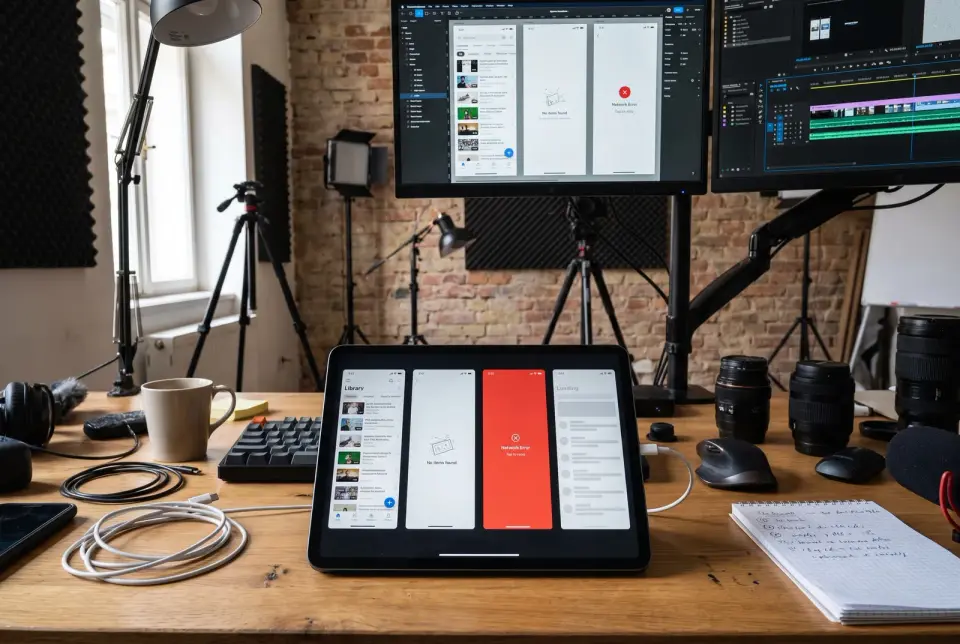
Every screen comes with hover, error, empty and loading states, so developers never have to guess.

Every screen comes with hover, error, empty and loading states, so developers never have to guess.

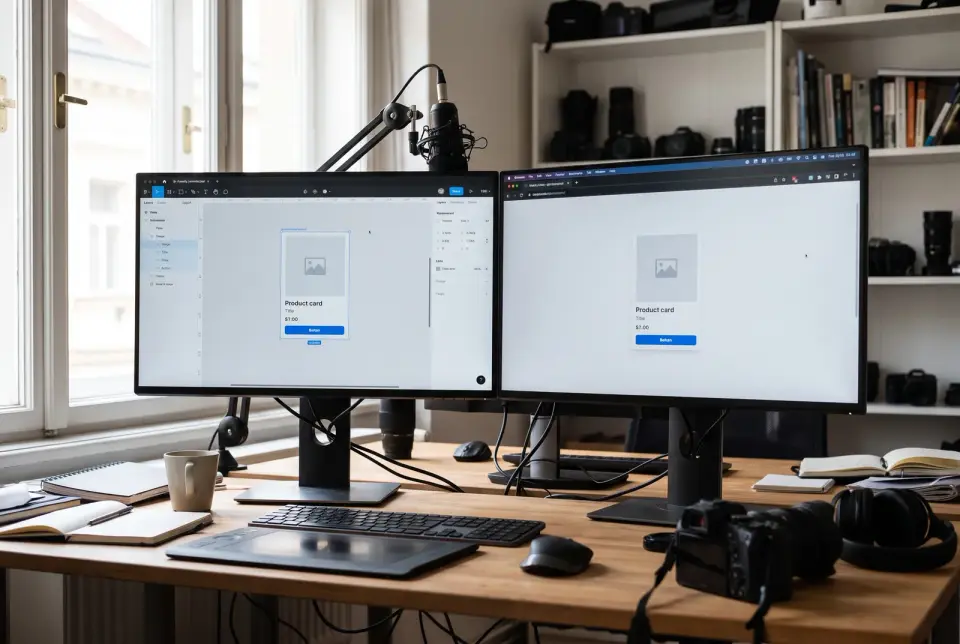
We draw components in Figma and build them in code in the same team, so the live site looks like the design.

We draw components in Figma and build them in code in the same team, so the live site looks like the design.

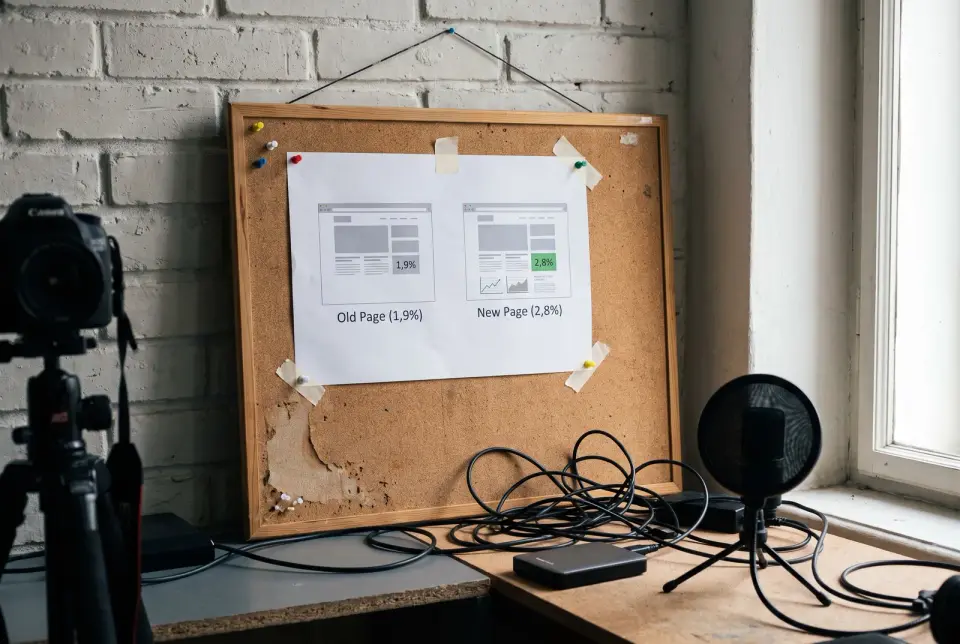
On a redesign we measure conversion before and after, so you can see whether the change paid off.

On a redesign we measure conversion before and after, so you can see whether the change paid off.

We design for mobile first, because that's where most visits come from today.

We design for mobile first, because that's where most visits come from today.

Every service in this category, explained

  • High fidelity design

    Finished screens with real content, ready for development.

    In short Our UI UX design services start with high-fidelity screens ready for development: real content, real states, light and dark mode, edge cases included. We hand them off with specs your developer can measure against.

    How we workWe design on a grid and in components, using real content and real text lengths, so it's obvious right away where copy overflows. We work through the edge cases for every screen. Contrast and legibility get measured at the design stage, before anything ships.

    What you getFinished screens in light and dark mode, with every state, edge case and spec for sizes, colors and behavior. Plus exported assets and the Figma source file, which is yours to keep.

    What's included

    • Real content, real text lengths
    • Light and dark mode
    • Edge cases handled in the design
    • Every measurement spelled out

    Design Systems

    Colors, type and components in one place for every screen.

    In short As a UX design agency, we treat one source of truth for colors, type, spacing and components as the foundation. A screen that used to take days now takes hours, and the product stops drifting into inconsistency with every release.

    How we workWe pull out what repeats across the finished screens and describe it as tokens: colors, type, spacing, radii, shadows. Colors and type come from the brand stage, where strategic brand design settles them first. From those, we build components in Figma and in code at the same time, so they never grow apart. Then we write the rules for when each component gets used.

    What you getA set of tokens and components in Figma and in code, with usage rules and one page where every part is visible together. Changing the main color or corner radius becomes a single edit, and your own team can build on the system without calling us.

    What's included

    • Tokens standardize every value
    • New screens ship in hours
    • Figma and code stay in sync
    • Rules for when to use each part

    Redesign

    We tell you whether a new look is enough or a rebuild is due.

    In short A product design agency should answer one question honestly: facelift or full rebuild. We back our answer with an audit, then we modernize the interface without breaking the workflows your users already rely on.

    How we workWe start with the audit and the data: what people actually do on the site, which pages bring in enquiries and where people get lost. From that, we tell you whether you need a new look or a full rebuild. We modernize in stages and pair every old URL with its new one.

    What you getA new interface built on what the data shows actually works, with URLs and content carried over and a redirect map. Plus a before-and-after comparison of the numbers wherever they can be measured, so you don't have to guess at the result.

    What's included

    • Straight answer: facelift or rebuild
    • Grounded in an audit and data
    • Keeps regular users' habits intact
    • Redirects mapped one to one

    What's in the box

    You do not order these separately: they are in every job, and they are ours to do.

    Component library

    As a UI design agency we turn the design system into real, reusable parts: documented components in Figma and in code that stay in sync with each other. Your developers stop building the same button five different ways.

    We document every component on its own: what it's for, which variants and states it has and when you'd reach for a different one instead. Figma and code get built against the same description and checked against one another. We also set up the process for adding a new part to the library.

    OutputDocumented components in Figma and the matching components in code, one page with every part laid out together, and a written process for adding a new one. Each component lists its variants, states and a note on when to skip it.

    • Identical components in Figma and code
    • Variants and states, documented
    • An overview page for review
    • A clear process for adding parts

    Style Guides

    A compact rulebook for anyone who touches the product after us: typography, color, spacing, imagery, what to do and what to avoid. It keeps quality intact when we're not in the room.

    We pick only the rules that actually get broken in practice, because nobody finishes reading a long document. For every rule, we put the right example right next to the wrong one. We also prepare ready-made exports and templates, down to pitch deck design, so doing it correctly takes less effort than improvising.

    OutputCompact rules for typography, color, spacing and imagery, each with a right and wrong example side by side. Plus ready-made exports, templates and slide masters, so a marketer puts together a banner or a deck without training and without a bill from a presentation design agency.

    • Made for non-designers
    • A right and wrong example per rule
    • Ready-made templates and exports
    • Keeps quality steady without us

    Responsive Design

    UI/UX design services cover every breakpoint: layouts get rethought for each one and tested on real devices, phone first. Most of your traffic is mobile, so the design should treat it that way.

    We start at the phone and build outward to larger screens, up to the in-store display, where point of sale design gets read at arm’s length. We solve the things that matter most on a narrow width: thumb-sized tap targets, tables, long words and forms. Designs get tested on real devices and with the system text size increased.

    OutputDesigns for phone, tablet and large monitor, with defined breakpoints and a description of what rearranges at each one. Plus fixes for the known problem spots and a record of testing on real devices.

    • Built mobile first
    • Checked on real devices
    • Forms and tables fit narrow screens
    • Works with larger system text

    Technologies

    Sound familiar?

    John Doefirst call
    1. The site looks like 2015 and we're embarrassed to send it

    2. An outdated look undermines trust before anyone reads the first sentence. We build the redesign on what works on the site today and move the look to where your company is now.

    3. Every page looks a little different

    4. Without a design system everyone adds their own buttons and shades. We build a component library with rules, so a new page is assembled from ready parts and matches the rest.

    5. On a phone the site is barely usable

    6. A desktop layout squeezed onto a phone doesn't work. We design for mobile first, with thumb-sized buttons and readable type, and expand the layout for larger screens.

    7. The developers built it differently from the design

    8. A picture of a screen isn't enough, the developer ends up guessing. We hand over components with states, sizes and colour tokens, and since the same team builds it, nothing gets lost on the way.

    Which one sounds like you?

    Pick your case and enter your own numbers. The screen works out what you're losing or gaining.

    People leave and I can't tell why

    Visitors a month2,000
    How many visitors buy1.5%
    Average order€120

    For a UI/UX audit to pay for itself in 3 months, you just need

    +8.3% on conversion

    Right now the site brings in about €3,600 a month: 2,000 visitors, of which 1.5% buy at €120. A UI/UX audit typically costs €900.

    Typical price from the studio price list. Revenue here ignores margin. This is the breakeven point, no one can guarantee a conversion increase in advance.

    I'm starting something new

    Development budget€20,000
    How many screens you think will need reworking25%

    At risk of rework after launch

    €5,000 of the budget

    Reworking 25% of the screens after launch means paying another €5,000 out of €20,000. A clickable prototype typically costs €1,200, and these changes happen there before any code is written.

    You set the share that needs reworking. The prototype's typical price comes from the studio price list.

    My product drifted

    How many people work on the interface4
    Hours a week each spends tweaking screens3 h
    How much your hour is worth€30

    Inconsistency costs you

    €1,559 a month

    4 people at 3 h a week each, at €30 an hour. A design system typically costs €2,650 and pays for itself in 1.7 months.

    You set the hours and the rate. This is an upper estimate: we assume the system removes the tweaking entirely. Typical price from the studio price list.

    Buy a template for a few euros?

    A ready-made template costs a few dozen euros and looks good in the preview. As a start it can be a sensible choice. The difference shows the moment you pour in your own content, brand and features the template never planned for.

    When a template is enough

    • You need a simple presentation for a few months before you get going
    • Your content fits the template as it is, without layout changes
    • The brand doesn't have its own visual style to build on yet
    • You don't mind hundreds of other sites looking the same

    When it starts holding you back

    • Every layout change means fighting code someone else wrote
    • The template drags in dozens of scripts and effects that slow the site down
    • New features, like a calculator or bookings, don't fit into it
    • Competitors look the same because they bought the same template

    From brief to screens ready for code

    1. You know what we design

      Call and materials

      We go through the brand, content, wireframes or current site and goals. We agree the number of screens and you get a fixed price.

    2. You see how it'll look

      Visual direction

      Two or three key screens show the direction: type, colours, rhythm. We decide on real content, a moodboard can't carry that.

    3. You have the full design

      Screens and states

      We finish all screens for mobile and desktop, with hover, error, loading and empty states.

    4. Every part has rules

      Design system

      We extract components and tokens from the screens: colours, fonts, spacing, shadows. New pages are then assembled from ready parts.

    5. The design fits

      Review and revisions

      Two rounds of feedback are included. We review the design with developers too, so nothing can be built differently from how it's drawn.

    6. The screens are ready

      Handover or build

      We hand over Figma files with specs, or build the site ourselves. On a redesign we compare conversion with the baseline after launch.

    What UI design costs

    Screen design from €1,000, a design system from €1,200, a component library from €600, a redesign from €1,000. Two feedback rounds included. Nothing is added on top, the price is final.

    Check pricing

    Where we've done this before

    • 3Dscene in the browser, no plugin
    • 0,10 sserver response, measured 8/2026

    An investing course platform that hands over compound interest as a tool you can pull on, instead of explaining it in a paragraph.

    Open the case study
    Spectrum Interactive
    Financial education · 2026

    Spectrum Interactive

    • ×5organic visitors, year on year
    • ×20pageviews, year on year
    • 100+pages for the whole group
    • 0,17 sserver response, measured 8/2026

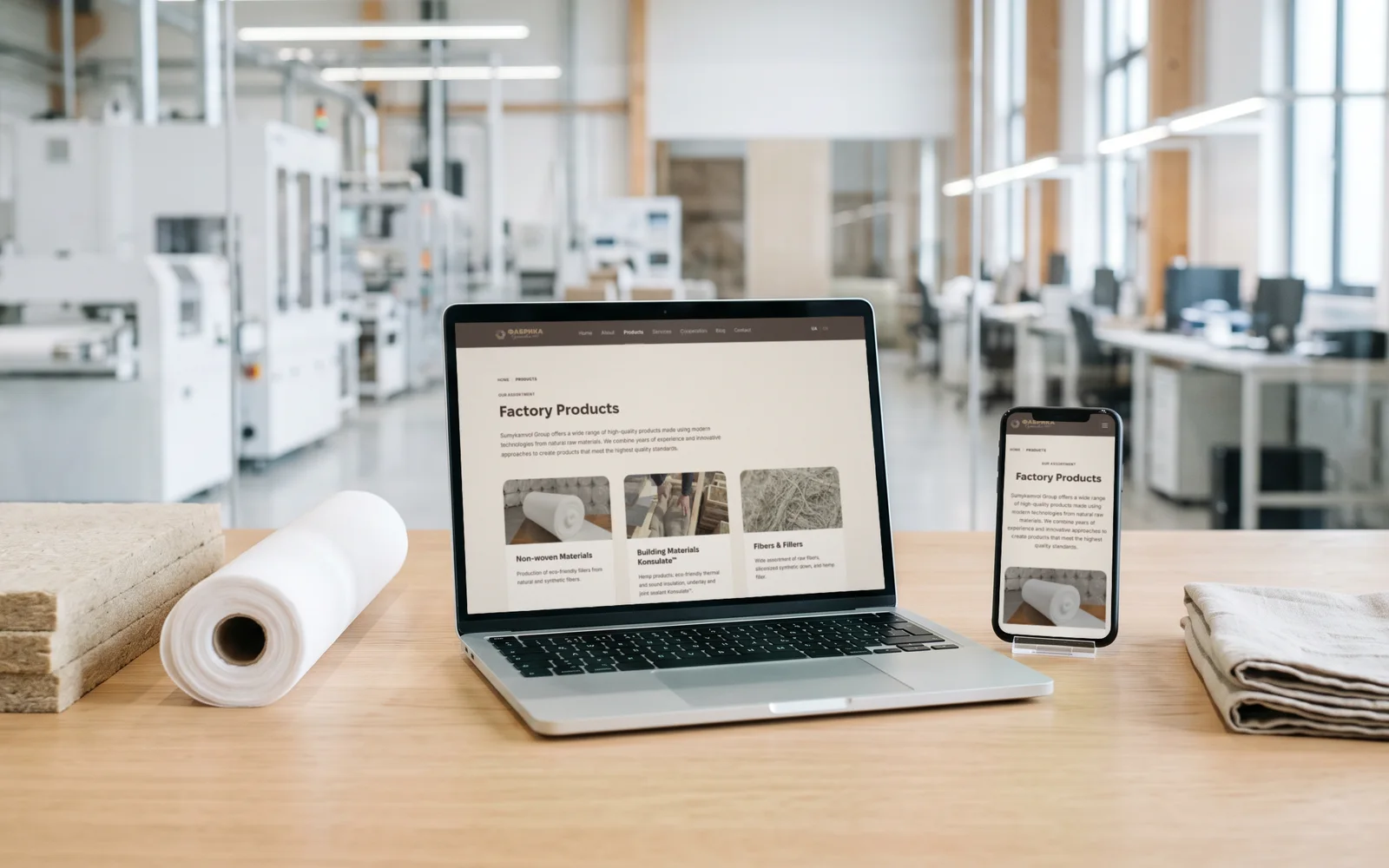
    A textile factory running since 1987 (nonwovens, Konsulate™ hemp insulation, finished UKONO™ home textiles) with a web presence stuck a decade back.

    Open the case study
    Fabrika Sumy
    Textile manufacturing · 2025

    Fabrika Sumy

    • 100+resident companies, Coca-Cola to Kyivstar
    • 85 000m² of halls, offices and warehousing to lease
    • 0,26 sserver response, measured 8/2026

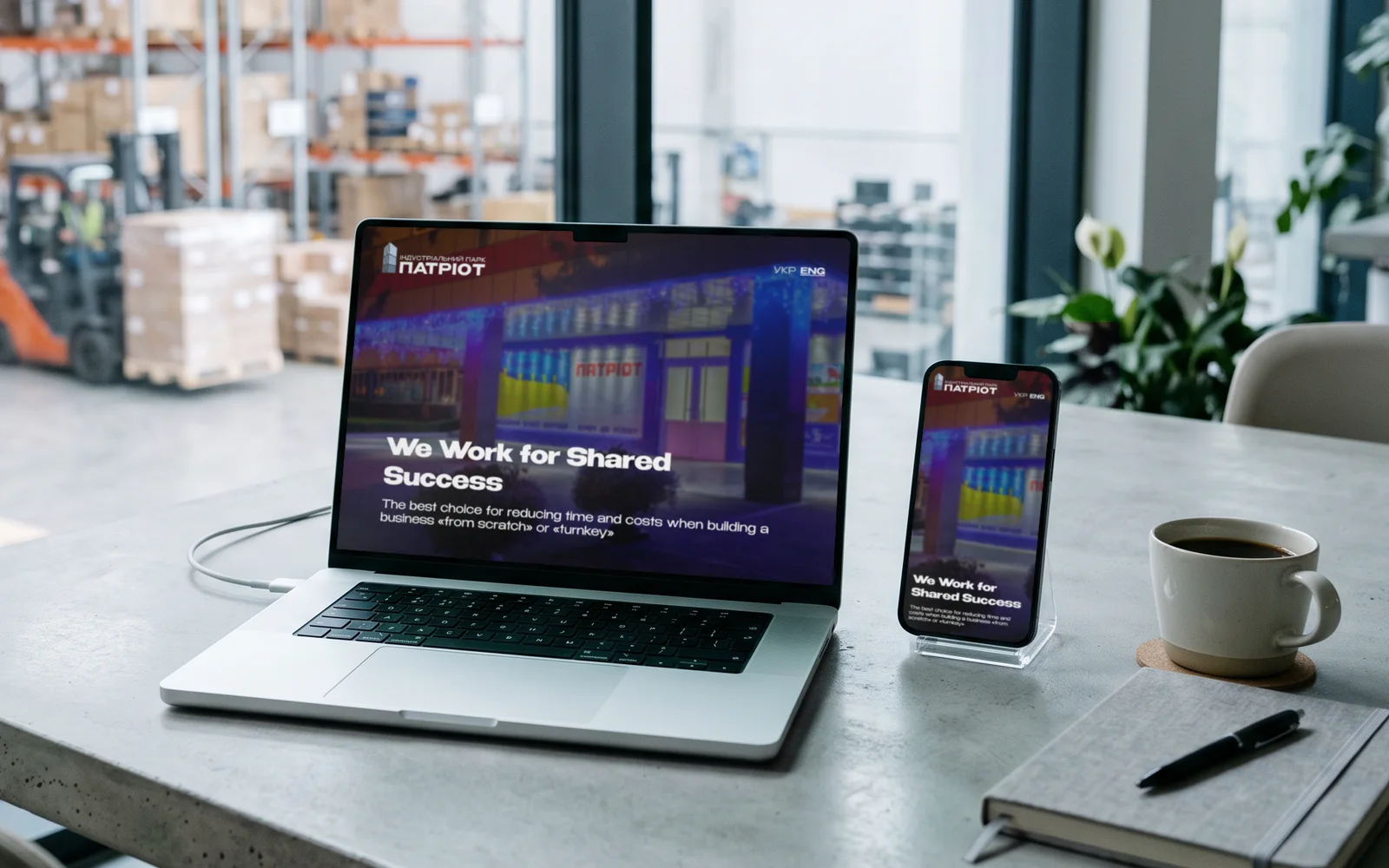
    An industrial park on the grounds of a 1987 textile factory, leasing production, warehouse and office space to businesses instead of selling to individual shoppers.

    Open the case study
    Industrial Park Patriot
    Industrial real estate · 2024

    Industrial Park Patriot

    01 / 03

    Evidence first, taste second

    Evidence drives our design decisions: research tells us what to fix, prototypes prove it works on real people, and analytics confirm whether it worked after launch. Everything sits on one design system, a single source of truth for color, type, spacing and components. A screen that used to take days now takes hours, and the product stays consistent as it grows. We don't vanish at handoff either: a designer stays on call through development, so the shipped product matches the one we tested.

    What you ask most often

    What is UI design?

    UI design (user interface) is the design of how screens look: layout, typography, colours, buttons, forms and their states. It builds on UX, which covers how people move through the site. The result is screens ready for developers.

    How much does UI design for a website cost?

    Screen design from €1,000, around €2,450 for a typical company site depending on the number of page templates. A design system from €1,200, a redesign from €1,000. You know the price after the first call. Nothing is added on top, the price is final.

    What is a design system and do I need one?

    A design system is a set of components and rules: buttons, forms, cards, colours, fonts and spacing. It pays off for a site or app that will grow and that several people work on. For a one-off presentation, styled screens are enough.

    Do you design the mobile version too?

    Always. We design for mobile first and then expand for tablet and desktop. Every screen has both versions, none gets improvised during development.

    Do I get the source files?

    Yes, the full Figma files with components and styles are yours. You can keep working on them yourself or hand them to another designer or developer.

    When does a redesign make sense?

    When the site's structure works but the look has aged or no longer fits the brand. When people can't find what they're looking for, the look isn't enough and we start with research. We always measure a redesign before and after.

    How long does the design take?

    A company site with five to eight page templates takes two to three weeks. A design system for an app three to five weeks. We give you the date after the call and keep it.

    Will you build a site from someone else's design?

    Yes. If you have a finished design, we review it, add missing states and mobile versions and build it. We often spot places where the design would behave differently in code and solve them upfront.

    How many feedback rounds are included?

    Two. We collect feedback on the whole batch of screens at once, so the design doesn't fall apart into piecemeal edits. Extra rounds are billed by the hour and agreed upfront.

    Ready to build something solid?

    Drop us a message. We reply within a few hours to set up a quick chat.

    1. 1Within hours: a human reply: first thoughts, maybe a question or two.
    2. 2Within days: a 30-minute call. You talk, we listen. Free, no obligations.
    3. 3After the call: a written fixed quote, or an honest answer that we're not the right fit, with a tip on who to ask instead.

    No sales scripts. You'll be talking to the people who'll actually build it.

    Allergic to forms? Fair.info@chronicles.cz+420 773 230 278

    By submitting this form, you're agreeing that we can use the details above to answer your enquiry. How we handle your data. We use it only to reply. We never sell it or add you to a mailing list.